

For most founders, hiring feels like the fastest way to shorten your runway. More salaries. More overhead. Less cash in the bank.
But that's only true if you're hiring without intention.
When done right, every hire should add life to your business, not take it away.
Because the right person doesn't just cost money; they create momentum, growth, and efficiency. And that difference shows up instantly when you model it properly.
Why Headcount Doesn't Decrease Runway (If Done Right)
Let's start with a mindset shift: hiring is not an expense, it's an investment.
When you hire strategically, you're not shrinking your timeline, you're extending it.
That next AE (account executive) might come with a salary, sure. But they might also unlock new revenue, speed up deals, and help your team hit cash-flow break-even faster than expected.
This is the magic moment where runway meets ROI, and the founders who understand this always make better decisions. That's the heart of good headcount planning: treating each role as a lever on the business, not just a line item.
The Power of "What If" Modeling
Founders don't have the luxury of guessing. That's why you need to turn hiring into a modeled decision, not a gut call.
Ask questions like:
What happens to runway if we bring on two new AEs this quarter?
How does that compare to delaying the hires by 60 days?
What if we double pipeline conversion instead?
These are the insights spreadsheets can't keep up with. A live financial model can: it syncs your actuals and updates every scenario the moment you change an assumption, so you can compare hiring plans side by side before you commit.
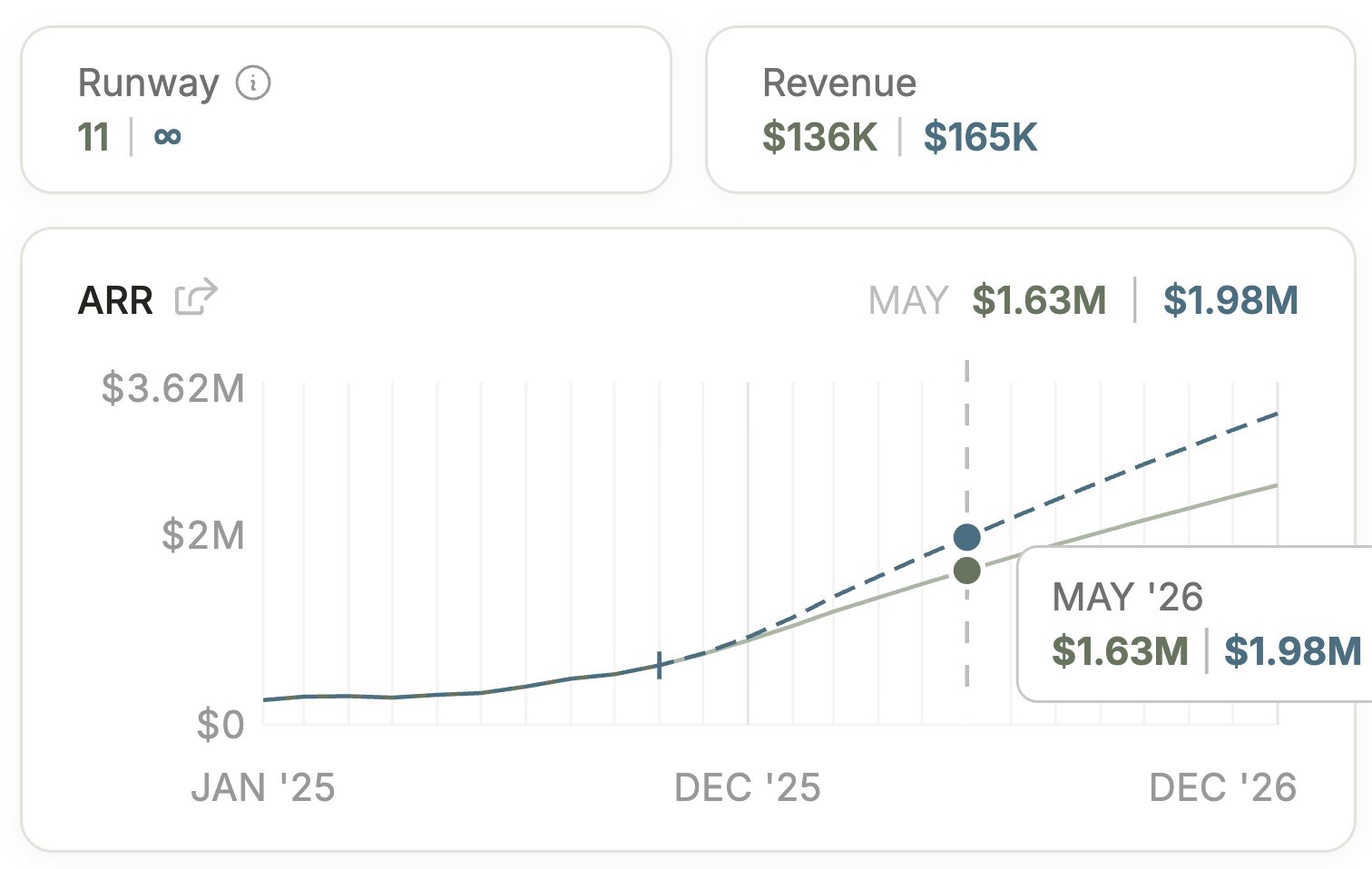
The Real Metric: Contribution to Lifespan
Every hire should have a measurable expectation of life, meaning they extend your company's future, not drain it.
Whether it's an engineer improving efficiency or a salesperson driving new revenue, each addition should lengthen your operational timeline.
In other words: your hires should buy you time.
And when you can see that change reflected in your live forecast, you're no longer hiring with fear, you're hiring with clarity.
Runway Is Meant to Evolve
Static runway numbers are a relic of spreadsheet-era finance.
Your runway should move dynamically with your business, reflecting every decision you make in real time. When your model is connected to your accounting data, that's exactly what you get, which is the whole point of runway clarity.
That's the difference between "we think we can afford this hire" and "we know exactly what this hire does to our runway."
Hiring Can Be Growth, Not Risk
Hiring doesn't have to shorten your runway, not when you understand its impact.
With the right modeling, every decision can be a data-backed move toward growth, profitability, and longer runway.
Stop thinking of headcount as a liability. Start seeing it as a strategy.
How Parallel Helps Founders See the Impact Clearly
At Parallel, we believe founders shouldn't have to guess how hiring decisions affect their future.
Parallel syncs your accounting (QuickBooks Online or Puzzle) into a live financial model, so your numbers stay current without the spreadsheet. From there, you can:
See your live runway update automatically as you hire and grow.
Model multiple "what if" scenarios instantly, from new roles to fundraising plans.
Plan hires against your real cash position with Parallel's headcount tools, then turn the result into a board-ready view.
It's a simpler way to plan hires without building another spreadsheet, and to see why founders choose Parallel for it.
Parallel helps founders turn hiring into a growth decision, not a financial risk.
Start free with a 15-day trial, no credit card required, or book a demo to see it on your own numbers.
Jump in the conversation here to see how other founders are thinking about hiring, runway, and growth.
FAQs
1. Does hiring always reduce your startup's runway?
Not necessarily. If you hire strategically, the right people can actually extend your runway by increasing efficiency, generating revenue, or accelerating growth milestones. It's about making data-informed decisions rather than treating headcount as a fixed expense.
2. How can founders measure the financial impact of a new hire?
By modeling how that hire affects burn rate, revenue, and cash flow. Parallel lets founders simulate "what if" scenarios against live data, showing whether a new hire shortens or extends the company's runway before committing.
3. What does 'expectation of life' mean in hiring?
It's the idea that every hire should add measurable value that extends your company's lifespan through revenue generation, productivity, or cost reduction. Each role should contribute more than it costs.
4. Why is scenario modeling important when making hiring decisions?
Because startup finances are dynamic. Scenario modeling helps founders test multiple hiring and growth plans and see how each one impacts runway, profitability, and cash flow.
5. How does Parallel help with headcount planning and runway forecasting?
Parallel syncs your accounting into a live financial model, automatically updates your runway, and lets you model hiring plans instantly. Founders can see how each decision affects their financial future without rebuilding spreadsheets or guessing.