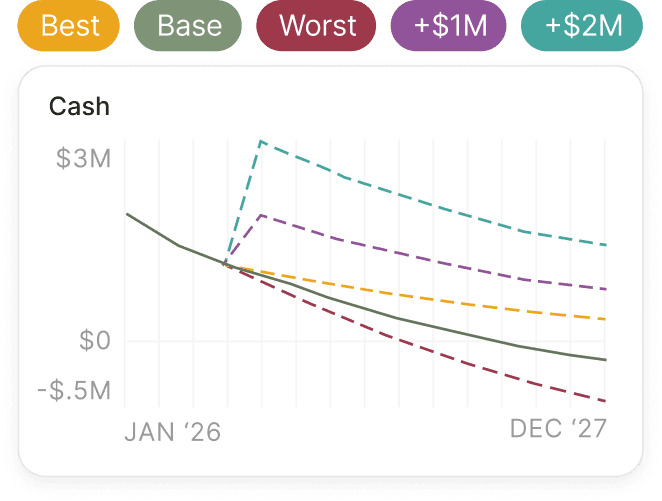
Scenario modeling
Run conservative, base, and aggressive hiring plans as separate scenarios. Compare side by side and merge the one you commit to into your live model.
Learn More about Scenario modelingSee how every hire impacts runway and revenue.
Parallel models every role with the full loaded cost, ramp, and the supporting hires that follow. Add a hire, see the impact on runway and revenue, and decide with the full financial picture, not just the salary.
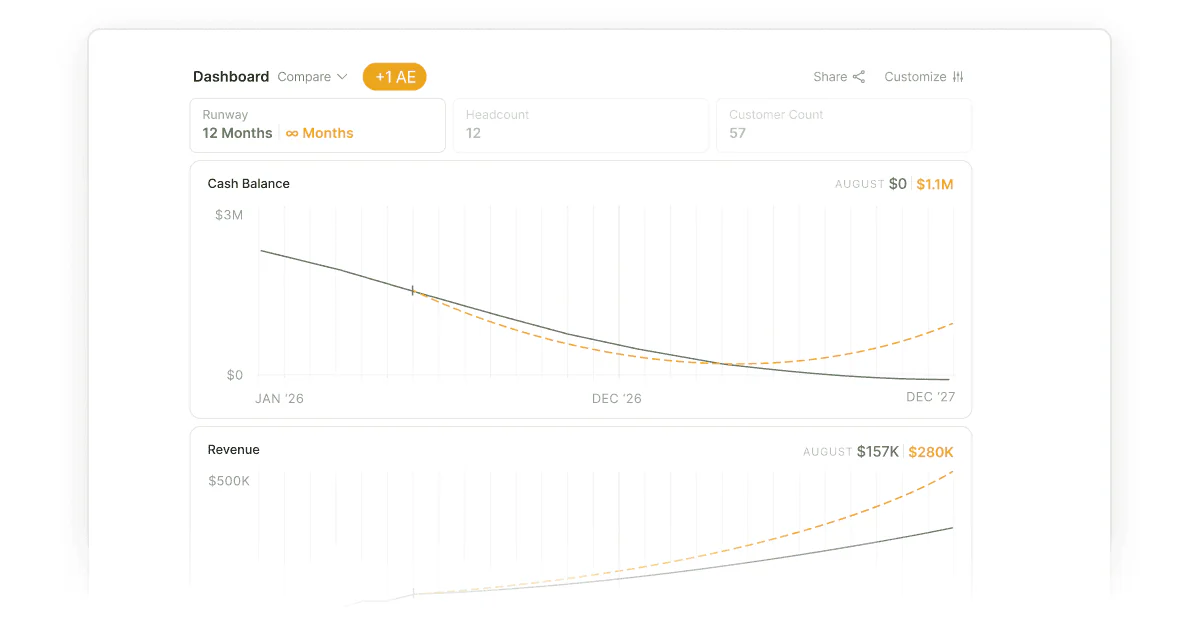
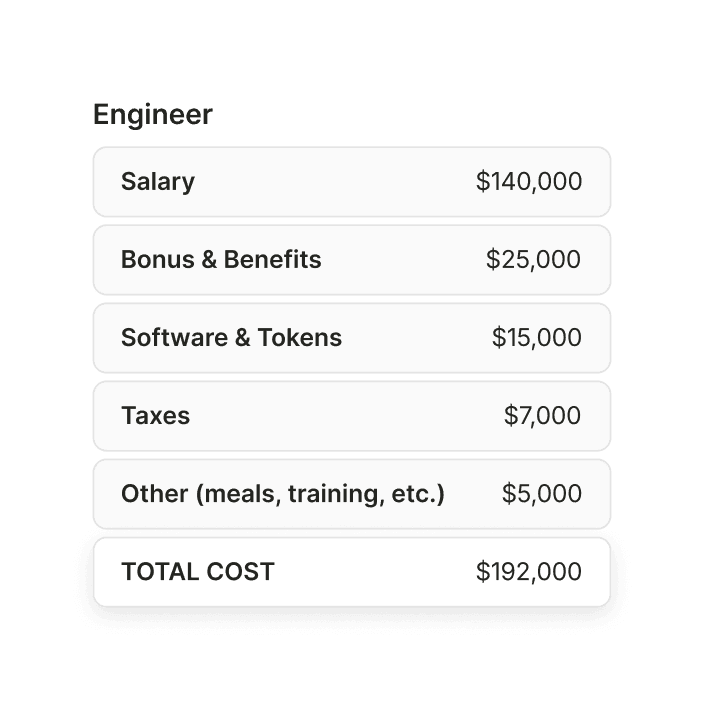
It’s hard to see the full cost of a hire. By the time you cover benefits, payroll taxes, and software, the full loaded cost of each role is 1.25-1.4x the base salary. A $120k offer will impact your runway by $145-160k. That’s the number you should be using to make headcount decisions.
The bigger gap shows up on the revenue side, especially for sales hires. An account executive role is often cash-negative for 6-12 months — if you want an accurate forecast, you’ve got to go beyond total compensation to consider ramp time, pipeline support, marketing spend, CS resources, commission structure, and cash collection lag.
Without a model that holds expenses and revenue together, you're picking a hire on intuition and discovering the math six months later. Parallel lets you layer two or three headcount planning scenarios together so you can see how the full financial picture reshapes your runway.
Salary, benefits, payroll taxes, bonus, ramp, and per-employee expenses give you an accurate cost estimate for each new hire.
Add a role and see the impact on your runway, revenue, and key metrics. Move the start date and watch each output respond.
Set rules so your forecast shows the team you’ll actually need to support growth: One CS rep per 150 customers, engineers tied to product complexity, or an AE cascade layered into the same scenario.
Run conservative and aggressive hiring plans as separate scenarios, then compare which buys you more runway, which hits your revenue targets, and which trade-off you can defend.
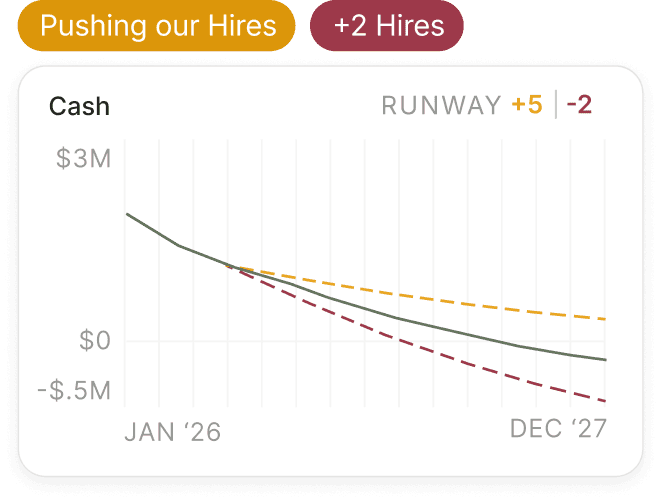
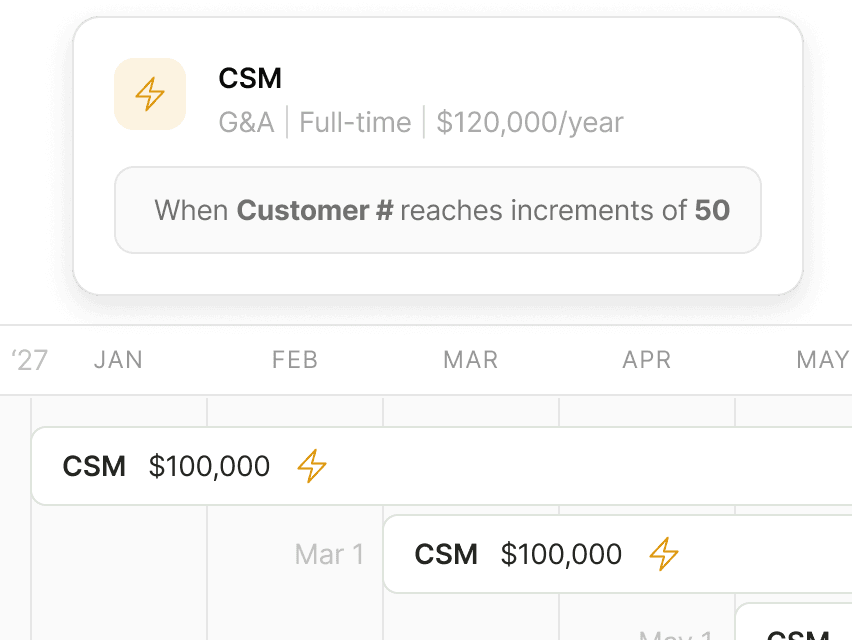
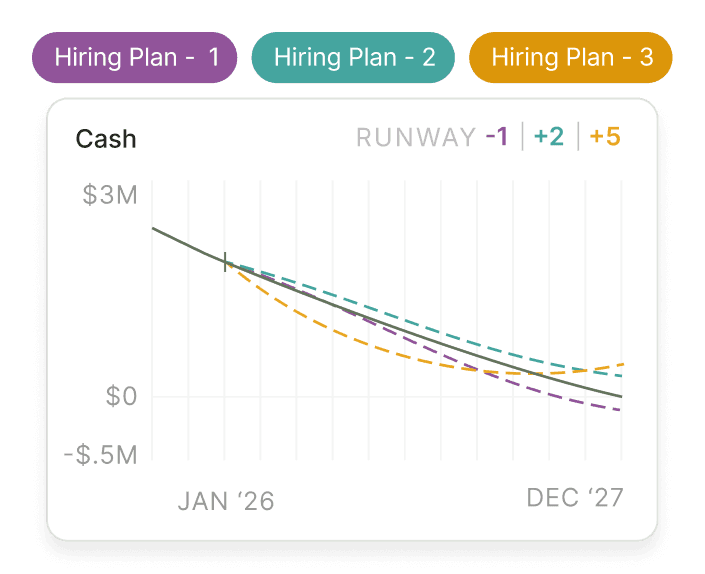
Parallel takes the complicated parts of headcount planning and lays them across your entire forecast — cascading roles that come with a lead hire, revenue an AE will bring in, months of ramp time, and more. The runway and revenue impact flow through every line of the model so you see the full financial picture before you send the offer letter.
Run conservative, base, and aggressive hiring plans as separate scenarios. Compare side by side and merge the one you commit to into your live model.
Learn More about Scenario modeling
QuickBooks Online and Puzzle sync your actuals automatically, so your headcount plan and real numbers stay in the same picture.
Learn More about Live integrations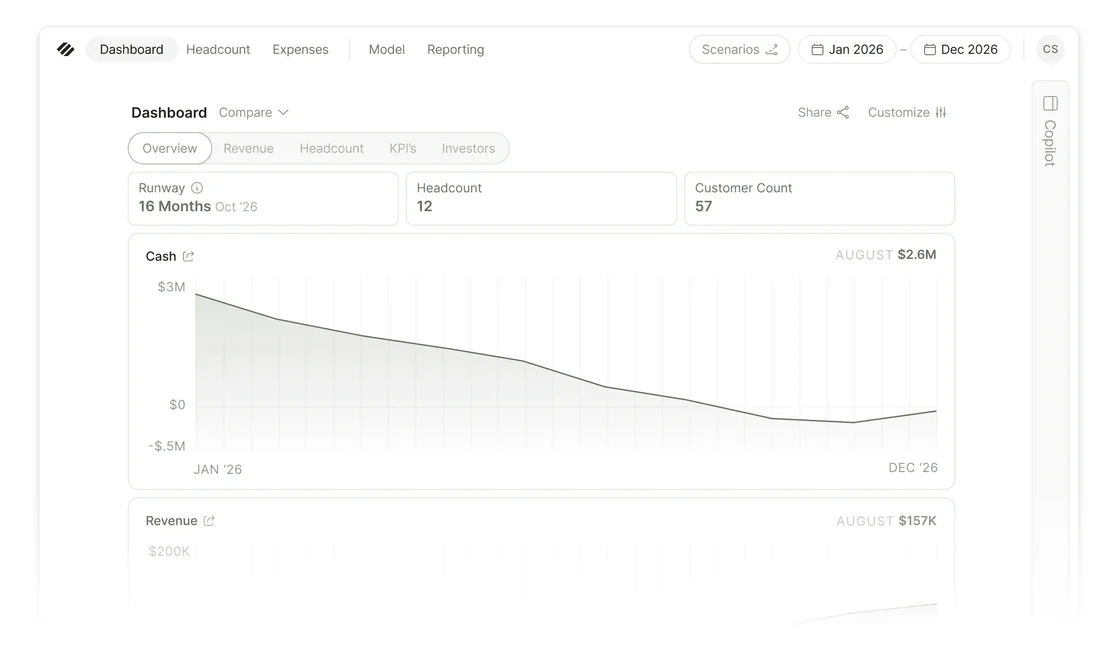
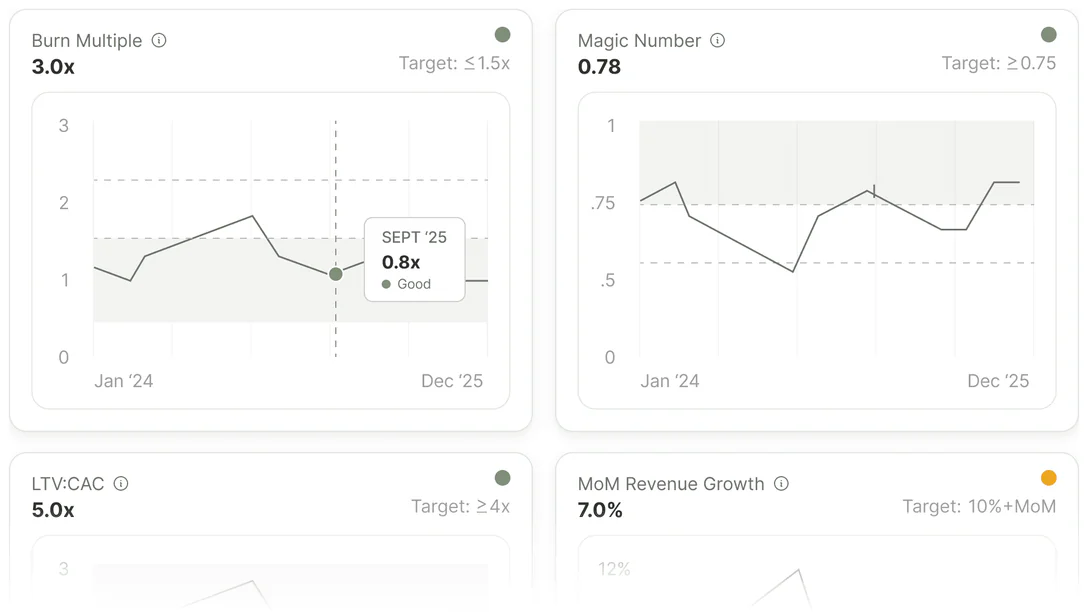
Runway, burn, burn multiple, and the SaaS metrics that respond as you adjust headcount. See every hire’s impact on metrics, all in one place.
Learn More about Dashboards and metrics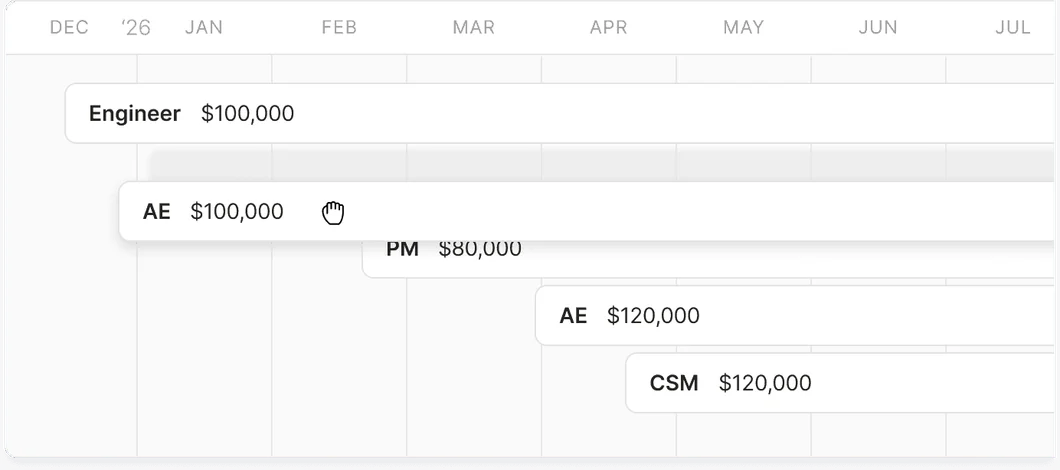
Forecast future roles, manage existing positions, and drive rule-based headcount planning that scales with your business. See every change reflected across your forecasts, budgets, and financial plans.
Learn More about HeadcountUse Cases
Parallel gives you the confidence to tackle the most critical financial questions in your startup
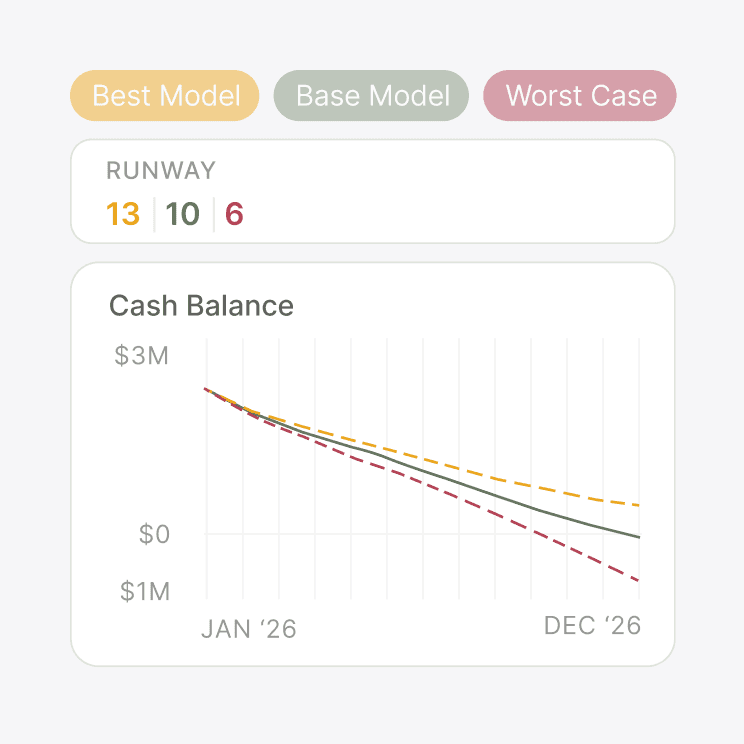
Know your runway the moment your data changes, with full visibility into what moved the needle.
Learn More about Runway clarity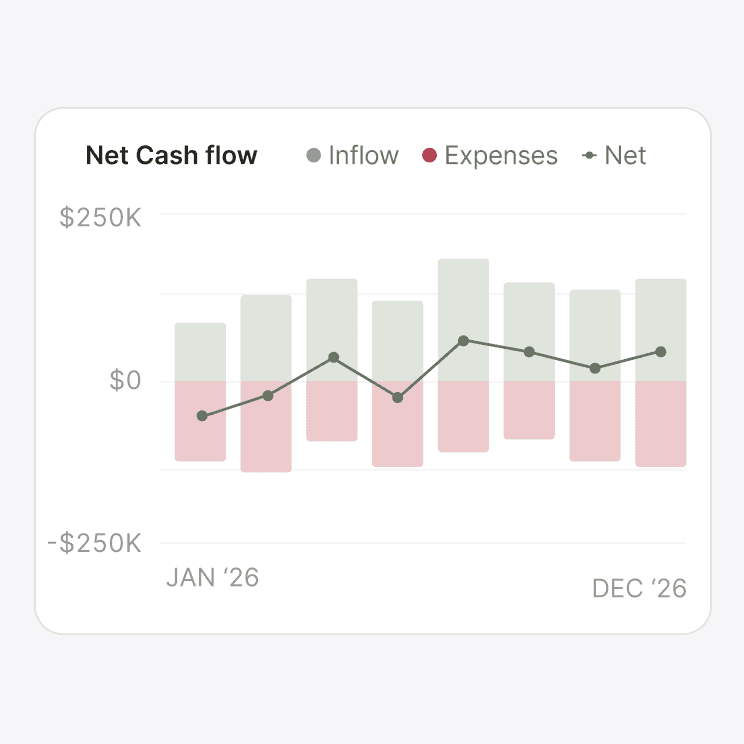
How much cash will you have in the bank and what levers do you have to change that.
Learn More about Cash flow management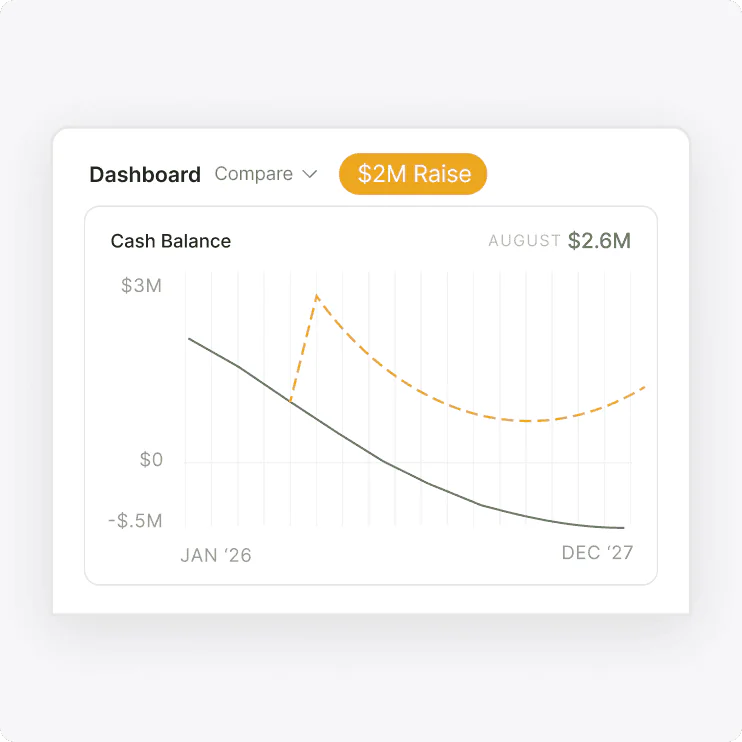
See how much to raise and what each fundraising scenario unlocks for hiring.
Learn More about Fundraising prep

Brice Douglas
CEO @ Zaymo
Fully loaded cost is the base salary for a role plus everything that comes with the seat: benefits, payroll taxes, bonuses, and per-employee expenses like software and equipment. It typically runs 1.25-1.4x base. That's the number that flows into your runway.
The better question is how this hire impacts the business and how much runway you're left with after. "Can I afford this role?" treats hiring as a budget question — "What needs to be true for this to work, and how does it change the curve?" treats headcount planning as the business decision it actually is.
Sales hires are the hardest to get right because the costs stack and the revenue lags. This isn't something you can do on the back of a napkin — it takes a full operating model to see what needs to be true for the rep to succeed and what impact the hire makes across the rest of the business. Model OTE, ramp, pipeline support, CS resources, and the cash collection delay together. Most reps are cash-negative for 6-12 months before you see their revenue impact.
Yes. Set rules like one CS rep for every 150 customers so your plan grows with the business. Your forecast reflects the team you'll actually need a year from now, not just the hires on your current wishlist.
Every role's loaded cost flows into burn, and burn flows into runway. Add a hire, move a start date, or change a salary and the runway curve adjusts immediately. There's no separate hiring spreadsheet to reconcile.
Hiring is the biggest decision you'll make. Parallel gives you the financial impact behind it all so you can plan with confidence instead of crossing your fingers.
Start Your Free Trial15-day free trial. No credit card required.