
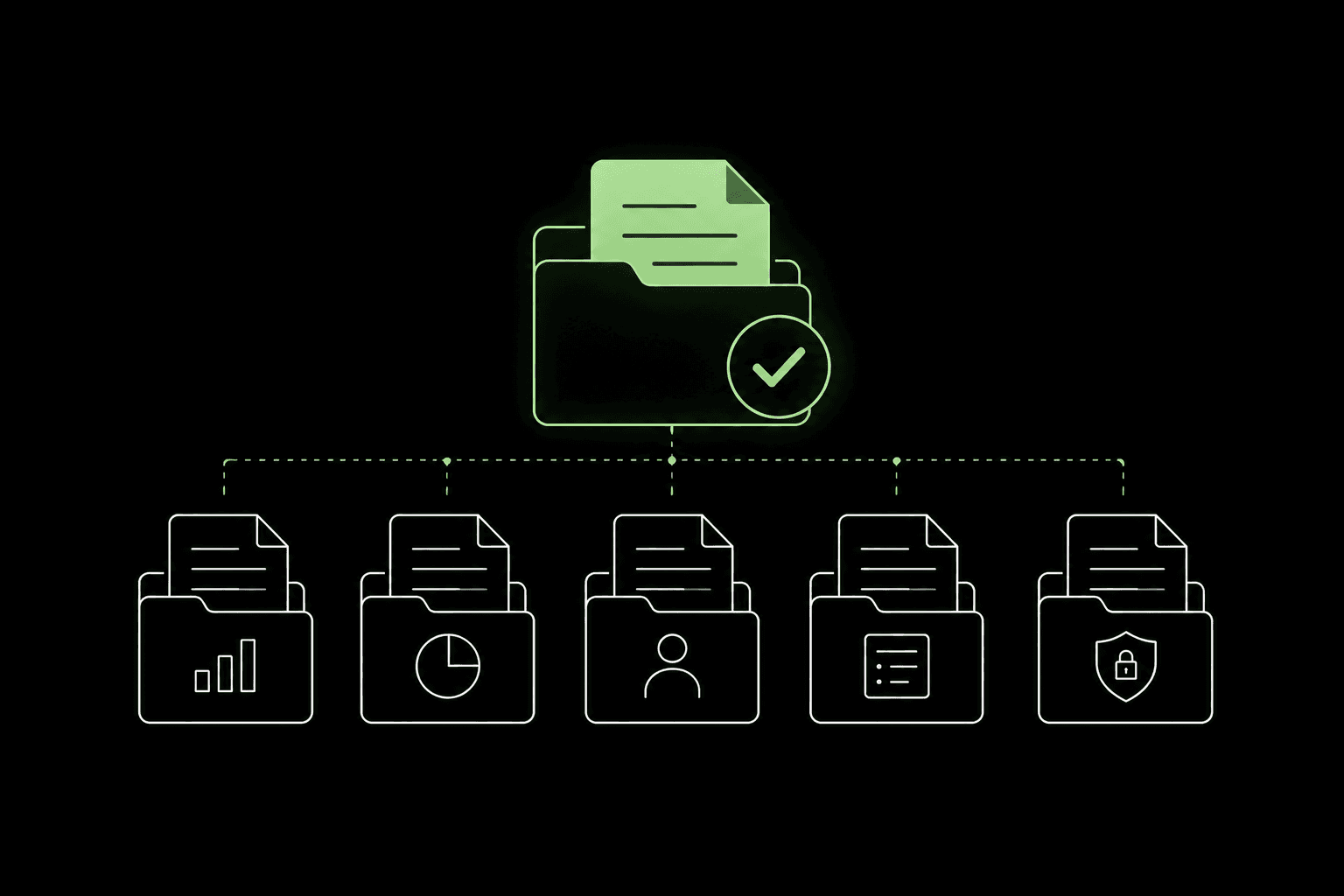
Your data room should be an export, not a project.
The best data room isn't one you build the week before investor meetings. It's a version of the operating model you've been running the business with, adjusted to tell the story you want investors to hear. But for most founders, that operating model doesn't exist yet. Financial modeling never feels urgent until it suddenly is.
Why most founders aren't ready when a data room is needed
The anxiety founders feel when a startup data room is needed isn't just about the work. It's the unknown. What does it actually need to include? How much is this going to cost? How long will it take? I need this yesterday. It turns into a rush that amplifies the stress of an already high-stakes process.
We see this pattern constantly. A founder comes to us and says they need a data room by Monday and have nothing to start from. That's understandable. Building a business takes everything you have, and financial modeling doesn't feel like the most urgent thing on the list. It's important, but it's not urgent. And because of that, it gets pushed to the back until a VC asks for it and suddenly it's both.
Here's the honest reality: without the right tools, keeping a financial model current isn't worth it for most founders. The spreadsheet goes out of date as soon as the business changes. Updating it is tedious. And founders should be focused on building a great business, not maintaining a spreadsheet. That's a reasonable trade-off to make.
But what those founders miss isn't just the data room. It's the months of financial clarity they could have had along the way. A current operating model means you've been making better decisions, understanding the real cost of your choices, checking yourself against hard truths, and doing cost-benefit analysis over time instead of just in the moment. That clarity compounds. It makes you a better operator. And it means that when the data room is finally needed, you're not starting from zero. (That's the whole case for building a financial model well before you need one.)
The question isn't whether founders should sacrifice building their business to maintain a spreadsheet. They shouldn't. The question is whether there's a way to have the operating model without the overhead. That's the problem worth solving.
What to include in a Series A data room
The bar for investor data rooms has gone up. A few years ago, you could raise a seed or even a Series A with minimal financial documentation. That's no longer the case. Investors increasingly expect financial rigor, and the level of preparation signals the maturity of your operation.
Here's what a startup data room should include at this stage:
A financial model with forward projections. This is the centerpiece. Your P&L, balance sheet, and cash flow statements, along with revenue projections, expense forecasts, and the assumptions driving them. This isn't your base operating model. It's the version that tells the story you want investors to believe: the best case, layered with the raise amount and the hires that raise enables. Investors want to see that you understand your business, that your assumptions are grounded, and that you've thought about what needs to be true for your plan to work.
Historical financials. Actuals from your accounting system, typically 12 to 24 months. These should be clean, reconciled, and easy to read. The contrast between your historical performance and your forward projections tells a story. Make sure it's a credible one.
Revenue detail. Breakdown of customers, contract values, retention, and expansion. For SaaS companies, an MRR or ARR waterfall showing new, expansion, contraction, and churned revenue. Revenue is vanity. Retention is sanity. This is the section where investors look for evidence of real traction, not just a few lucky wins.
Cap table. Current ownership structure, including outstanding SAFEs, convertible notes, and option pools.
Key metrics. Burn rate, runway, churn, CAC payback, NRR, burn multiple, gross margin. These should come from your model, not a separate spreadsheet assembled for the raise. (For which of these matter most by stage, see the SaaS metrics that actually matter at seed and Series A.)
Team overview. Who's on the team, key roles, and the hiring plan tied to the raise.
Use of funds. What will this capital do? This should tie directly to the financial model. If you're raising $3M, investors should be able to see what that enables in terms of hiring, growth, and timeline to the next milestone. (Sizing that number is its own decision — see when to raise and how much.)
A word on what not to include: resist the urge to over-prepare. Some founders assemble 40+ documents thinking thoroughness impresses investors. It doesn't. It overwhelms. Keep the data room tight, organized, and easy to navigate. If an investor wants something specific, they'll ask. The goal is to demonstrate clarity and command of your numbers, not to bury them in documents.
Your data room should be an export, not a project
The traditional approach is to treat a data room as a project: gather documents, build a model, clean up numbers, assemble everything into a folder. It works, but it's stressful, it's slow, and it means you didn't have the financial clarity while you were running the business.
The better approach: have an operating model that's already current. When a data room is needed, you create a scenario that layers on the raise, the associated hires, and the growth story you're telling investors. Then you export it. Parallel keeps your model current by syncing your accounting (QuickBooks Online or Puzzle), and its reporting turns that model into board- and investor-ready output.
But it's not just the base model you're sharing. You're shaping your operating plan into the version of the future you're raising for: the best case, plus the raise amount, plus the hires that capital enables. That's the story you tell investors.
The question you have to ask yourself is whether that story still holds up when you get back to running the business. It's easy to pitch investors that everything is going to take off once you raise $3M. But then you have to actually operate, and things won't go perfectly. If you take the raise plan and overlay it on your base case, are you still in a good position? What about the worst case? The plan you present to investors should be one you'd be comfortable executing even if growth comes in below your best-case assumptions. Running those side by side is what scenario modeling is for.
Investors can tell the difference between a model that was lived in and one that was assembled for the meeting. A financial model pressure-tested through months of real decisions is simply more credible than one built in a weekend.
It also means you can update it. A data room isn't a one-time deliverable. Over four to six months of fundraising, your plan will change. New customers come in. Hires happen. Assumptions shift. If your data room comes from a living model, updating it takes minutes instead of being a project every time something changes.
How data room preparation affects your fundraising outcome
The more financially prepared you appear as a founder, the better. At seed and at Series A. But being prepared doesn't just mean having numbers. It means having a story to tell and the data to back it up.
The founders who get the best terms are the ones who can walk into a room, tell a compelling story about where the business is going, and then show the financial model that supports it. They understand their metrics, they can speak to their assumptions, and they have a plan grounded in reality. The data room is the artifact that demonstrates all of that.
The flip side is also true. Scrambling to pull numbers together, presenting a model that clearly wasn't used to run the business, or not being able to answer basic financial questions — it signals a lack of operational maturity. It raises concerns that have nothing to do with the product or market.
You don't need to spend months preparing a data room. You need to be running your business with financial clarity. The data room takes care of itself.
Frequently asked questions
What should a Series A data room include? At minimum: a financial model with forward projections, 12-24 months of historical financials from your accounting, revenue detail (an MRR/ARR waterfall for SaaS), your cap table, key metrics, a team overview, and a clear use of funds that ties back to the model. Keep it tight — over-preparing with 40+ documents overwhelms rather than impresses.
How long does it take to prepare a data room? If you've been running the business on a living, current model, it's minutes — you create a scenario that layers on the raise and export it. If you're starting from a stale spreadsheet, it becomes a multi-week project right when you have the least time to spare.
What do investors look for in a data room? Financial rigor and credibility. They can tell the difference between a model that was lived in through months of real decisions and one assembled the weekend before. Grounded assumptions, clean historicals, and a forward plan you'd actually be comfortable executing matter more than volume of documents.
Build your operating model in Parallel and turn it into a data room in minutes. Your actuals, projections, and scenarios in one place, ready to export when the conversation starts. See how Parallel handles fundraising prep, or start free — 15-day trial, no credit card.
Related: When to Raise and How Much: A Practical Framework for Founders · How to Build a Financial Model for Your Startup · SaaS Metrics That Actually Matter at Seed and Series A